

Elm (Y3 Mrs Pounder)

Welcome to Elm Class 2026-27
- PE will be on WEDNESDAY afternoons- make sure kit is in school all week encase of changes please :)
- New homework will be given out every Friday. Hand in any day of the week.
- Spellings will be tested on Monday and new ones stuck in homework books (if they have been handed in)
Any questions/problems- please see Mrs Pounder or email elizabeth.pounder@brookfieldjunioracademy.org
I will answer any emails Monday-Friday 8-4pm :)
Autumn Term 1
ENGLISH

This six-week unit is a study of the 1968 classic children’s novel The Iron Man by Ted Hughes. The learning journey develops children’s reading comprehension, fluency and vocabulary as they explore the characters, plot and language in the story. Children make connections between the characters and themes to create varied, meaningful writing for a range of audiences and purposes. Grammar and punctuation teaching is embedded within the context of the text, with children exploring the effect language and structures have on the reader.
MATHS
Place Value
Year 3 place value objectives focus on mastering three-digit numbers up to 1,000. Children learn to read, write, compare, and order numbers using both numerals and words, while identifying the exact value of hundreds, tens, and ones digits.
They practice counting forward and backward in steps of 4, 8, 50, and 100, find 10 or 100 more or less than any given number, and represent these values using various objects and diagrams to solve practical math puzzles.
They will also consolidate 2, 3, 5 and 10 x tables.
Science-
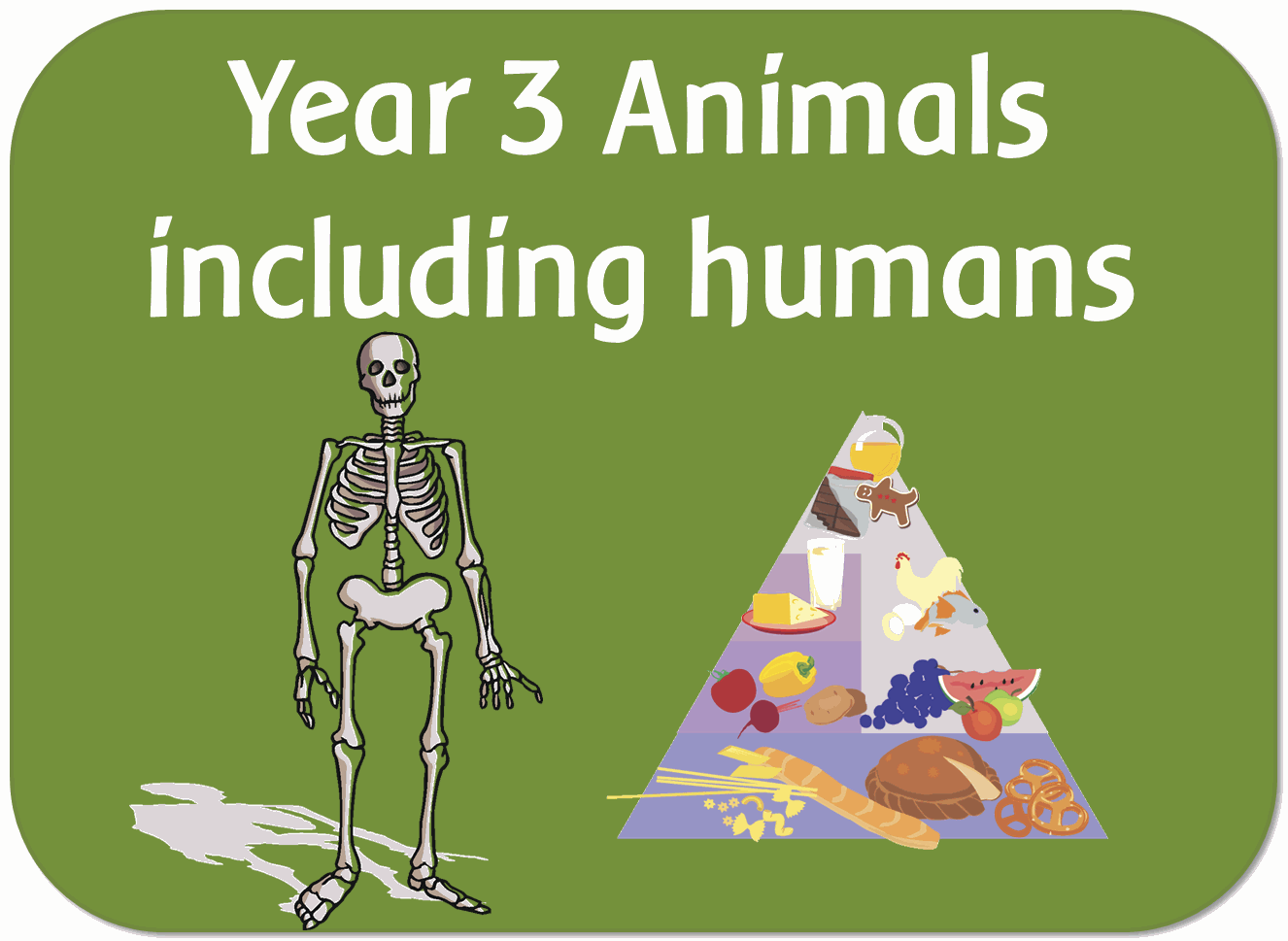
This unit teaches that humans and other animals need the right types and amount of nutrition from a balanced diet—including carbohydrates for energy, proteins for growth, and vitamins for health—because they cannot make their own food. To support this nutrition and enable movement, the body relies on a skeleton and a muscular system. The internal skeleton protects vital organs like the heart and provides structural support, while muscles attach to these bones and work in pairs, contracting and relaxing, to allow the body to move.
History- The stone age
The Stone Age is taught in Year 3 to introduce children to British prehistory through three distinct periods: the Palaeolithic, Mesolithic, and Neolithic eras. Students learn how early humans transitioned from nomadic hunter-gatherers using basic flint tools into settled farmers who built permanent villages like Skara Brae and monuments like Stonehenge. Because this period has no written records, the curriculum focuses heavily on archaeology, teaching children how we use physical artifacts to understand ancient life and past events.
We will also be visiting POPS Adventure camp to take part in a Stone Age Day! WEDNESDAY 9TH SEPTEMBER!
ART - Drawing
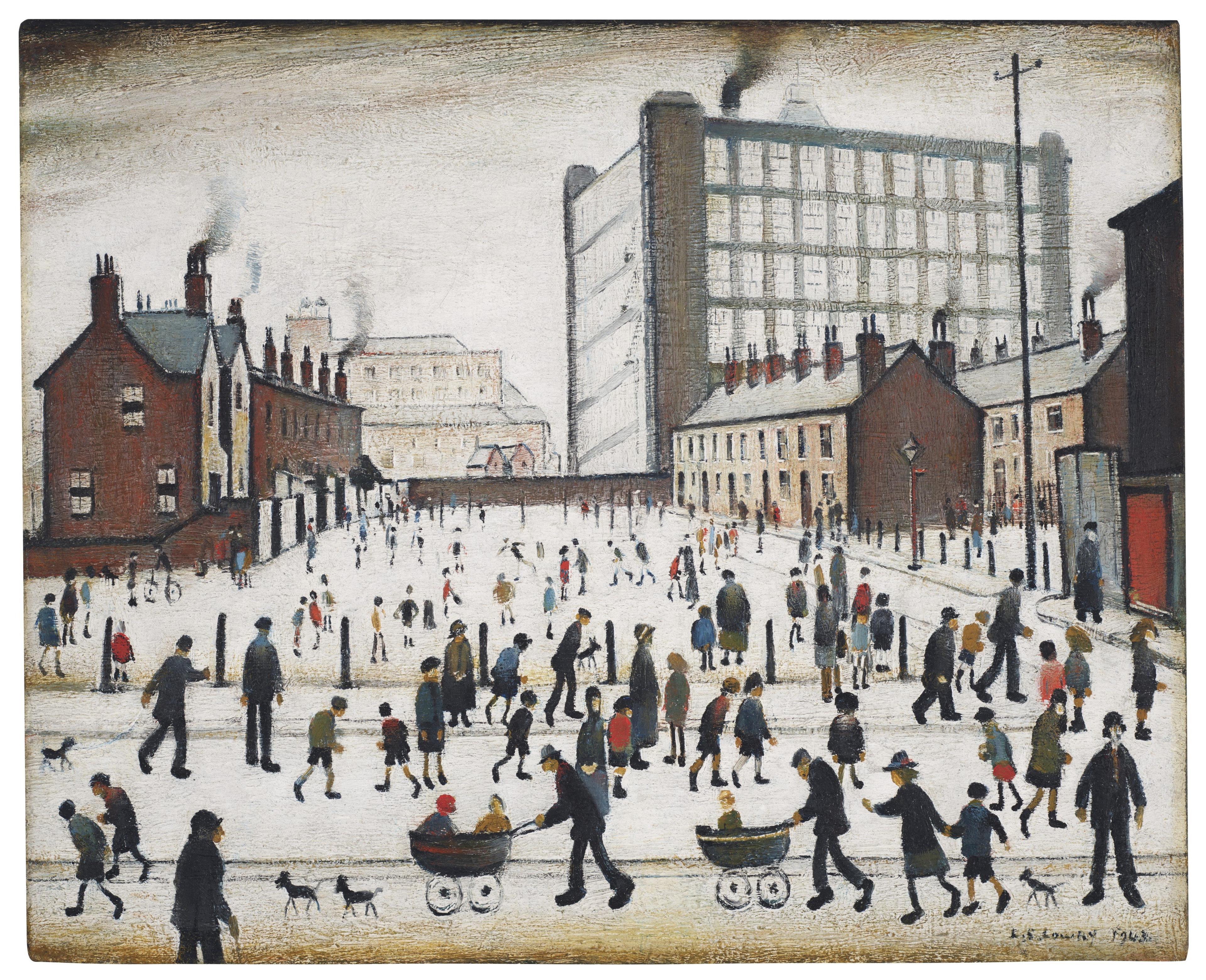
This unit will develop Year 3 drawing skills through the work of L.S. Lowry, focusing on building architectural structures using straight lines and geometric shapes, introducing spatial depth through foreground and background layers, and transforming simple "matchstick" figures to show movement.
Additionally, children will practice pencil control and cross-hatching to replicate Lowry's unique textures, industrial grime, and smoky tones. The children will also learn how to use a sketchbook to collect ideas and practice techniques.
COMPUTING - Connecting Computers
Children will develop their understanding of digital devices, with an initial focus on inputs, processes, and outputs. They will also compare digital and non-digital devices. Next, they will be introduced to computer networks, including devices that make up a network’s infrastructure, such as wireless access points and switches.
Finally, learners will discover the benefits of connecting devices in a network.
RE
In this unit, pupils will learn about the Old Testament people of God and how they lived their lives. They will learn the story of Noah, considering what it was like for him to follow God. They will learn about the covenant that Christians believe that Noah made with God, making links to the promises that Christians make at a wedding ceremony. Pupils will spend time looking at several texts that share stories from the Old Testament people of God in detail. They will consider the importance of returning to the original text for meaning rather than learning the story from videos or children’s books.
PE- Football

Year 3 football objectives focus on the following:
Stop a rolling ball.
Make a series of passes to teammates.
Know how to dribble with the correct part of the foot.
Can shoot at a wide target with some power and some accuracy.
Can show how to mark (defend) a player
MFL
Aprendo español (I Am Learning Spanish)
By the end of this unit we will be able to: find Spain on a map and be able to recall at least 1 Spanish-speaking country,use key greetings, ask and answer the question ‘How are you?’ in Spanish, ask and answer the question ‘What is your name?’ in Spanish, count to 10 in Spanish, read, write, say and recognise 10 colours in Spanish.
Music: Rhythm and Layers
Year 3 Music: Rhythm and Layers focuses on teaching children the difference between a steady pulse and changing rhythm patterns. Throughout this topic- pupils learn to read basic notation and collaborate in groups.
By combining body percussion and untuned instruments, they build a multi-layered ensemble piece, exploring how changing the number of sounds creates a thicker or thinner musical texture.