
Butterflies (FS1 Mrs Lloyd)
Welcome to our Class Page!
Butterflies 2026-2027
A very warm welcome to Butterfly Class!
We would like to welcome all of our children and families, both those returning to us and those joining us for the very first time. We are delighted that you are part of our Butterfly family and cannot wait to begin another exciting year together.
Our team consists of Mrs Lloyd, Nursery Manager, and our wonderful Teaching Assistants, Mrs Bool and Mrs Clarke. Together, we are passionate about creating a happy, safe and nurturing environment where every child feels valued, confident and excited to learn.
We are looking forward to getting to know each and every child, celebrating their unique personalities and supporting them as they grow in confidence, independence and curiosity. Building strong, positive relationships with both our children and their families is incredibly important to us, and we believe that working together helps every child thrive.
Throughout the year, we will be sharing updates, photographs, learning experiences and important information on our class page and school Facebook page, so please check back regularly to see all the wonderful things your children have been doing.
We are incredibly excited for a fantastic year filled with fun, friendships, laughter and lots of exciting learning opportunities.
We look forward to welcoming you all to Butterfly Class!
Mrs Lloyd, Mrs Bool and Mrs Clarke
Reading in Butterfly Class
We love sharing stories every single day!
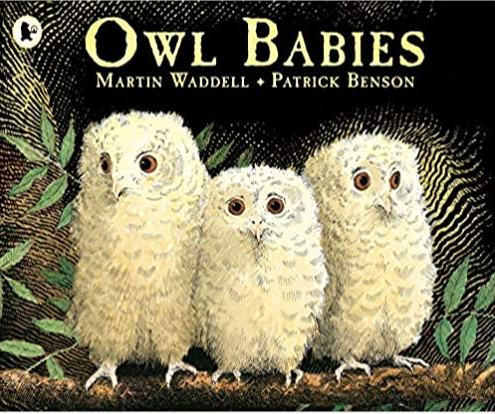

Over the coming weeks, our focus texts will include the wonderful story Owl Babies, alongside a range of non-fiction books about owls. We will also be exploring a variety of stories and information books linked to our People Who Help Us topic, helping children develop their vocabulary, understanding of the world and love of books.
As well as our focus texts, we will be enjoying listening to and sharing lots of other exciting stories throughout the week. Reading together helps to develop children's imagination, communication and language skills, as well as fostering a lifelong love of books.
Within Butterfly Class, we have our very own cosy reading area where children can independently explore books throughout the day. We are also very fortunate to make regular visits to our wonderful school library, giving children the opportunity to discover new books and authors.
Each week, your child will bring home a 'Reading for Pleasure' book to enjoy with you. These books are for sharing together and helping children develop a positive enjoyment of reading.
We kindly ask that you record reading with your child at least four times each week in their reading record. This can include sharing any book of your choice—it doesn't have to be their school book! Every child who reads four times in a week will receive 4 Dojo points, which they can collect and save towards earning a special prize.
Thank you for your continued support. By working together, we can help your child develop a lifelong love of reading!
🍂 What Are We Learning About in Autumn 1?
🌟 Our Theme: Marvellous Me!
⭐ How does learning work in FS1?
In Butterfly Class, learning is planned around exciting themes that capture children's interests and help make learning meaningful. This half-term our theme is Marvellous Me!, where we will be learning all about ourselves, our families, our feelings and the people who help us in our community.
Learning through themes allows children to make connections across all areas of the EYFS curriculum through play, exploration and first-hand experiences.
⭐ Why do we teach this way?
- It keeps children engaged, motivated and excited to learn.
- It helps children make meaningful connections in their learning.
- Themes develop rich vocabulary and introduce new experiences.
- All areas of learning are naturally woven together through purposeful play.
🤗 Personal, Social and Emotional Development
This half-term children will be learning to:
- Say please and thank you.
- Show effortful control and begin to take turns.
- Talk about and begin to manage their emotions.
- Become more independent and confidently reject help when appropriate.
- Explore new environments with confidence.
- Build positive friendships and relationships with others.
👥 Communication and Language
Children will be learning to:
- Understand and act on longer sentences.
- Answer simple who, what and where questions.
- Talk about how they are feeling using words as well as actions.
- Begin to pronounce and use longer, multi-syllabic words.
- Listen carefully during stories and conversations.
🏃 Physical Development
Gross Motor
Children will be learning to:
- Ride tricycles, scooters and push-along wheeled toys with increasing confidence.
- Develop balance, coordination and control.
- Use the toilet with support and gradually become more independent with self-care.
Fine Motor
Children will be learning to:
- Explore a variety of materials and tools.
- Develop hand strength and control through mark making, painting, threading, playdough and other fine motor activities.
🔢 Mathematics
Children will be learning to:
- Recite numbers to 3.
- Join in with number songs and rhymes.
- Compare groups using the language more than and less than.
- Compare size and weight using mathematical language and gestures.
📗 Phonics
Children will be learning to:
- Repeat familiar words and phrases from stories.
- Talk about the pictures in books.
- Enjoy listening to rhymes, songs and stories.
- Develop early listening and speaking skills ready for future phonics learning.
📚 Characteristics of Effective Learning
We will encourage children to become confident learners by developing:
- Playing and Exploring – finding out and investigating.
- Active Learning – concentrating, persevering and enjoying achievements.
- Creating and Thinking Critically – having their own ideas, solving problems and making choices.
💡 Class Experiences & Memorable Moments
This half-term we are looking forward to:
- 🦉 An exciting Owl Visit in school.
- 👩⚕️ A visit from a Doctor and Nurse.
- 🪥 A Tooth Brushing Club visit.
- 👮 Meeting a Police Officer to learn about how they help us.
❤️ A Special Focus This Half Term
Autumn 1 is all about helping children settle happily into nursery. We will be spending time:
- Building strong, positive relationships.
- Helping children feel safe, secure and confident.
- Learning classroom routines and expectations.
- Encouraging independence through play and daily routines.
- Developing friendships and a love of learning.
- Getting to know each child through play, conversations, observations and carefully planned activities. This helps us to understand what each child already knows, can do and may need support with.
- Observing children and gathering information to help us to plan appropriate learning opportunities, identify each child’s next steps and ensure that teaching meets the needs of all children.
- Parents and carers play an important role in this process. We value any information you share about your child’s interests, achievements and development at home, as this helps us to build a complete picture of their learning.
👨👩👧👦 Working Together with Parents
Thank you for supporting your child's learning at home.
🕑 Weekly Reminders
- 📖 Read together 4 times each week and sign your child's reading record.
- 🏡 Complete activities from the Home Learning Menu.
📅 Dates for your Diary
2.9.26 School starts
14.9.26 Owl Visit to EYFS
18.9.26 F2 to perform our first Poem in assembly (Look out for this on Facebook)
22.9.26 9am ans 3pm EYFS Parents Phonics Workshop
1.10.26 EYFS Harvest Festival 2:30pm
2.10.26 Police to visit EYFS
5.10.26 INSET DAY
6.10.26 Doctor to Visit EYFS/9am & 3pm EYFS Parents Writing workshop
7.10.26 Nurse to visit EYFS
13.10.26 Parents Evening
14.10.26 Toothbrushing Club to Visit EYFS
20.10.26 EYFS Maths parents workshop
23.10.26 INSET DAY
📸 We'd love to celebrate your child's achievements at home! Please send photographs of home learning to:
natalie.lloyd@brookfieldjunioracademy.org
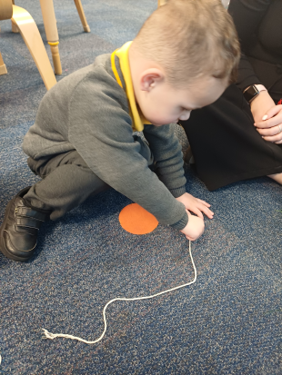
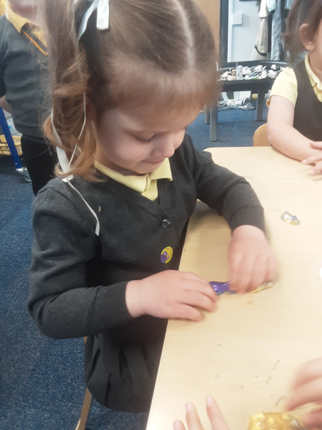
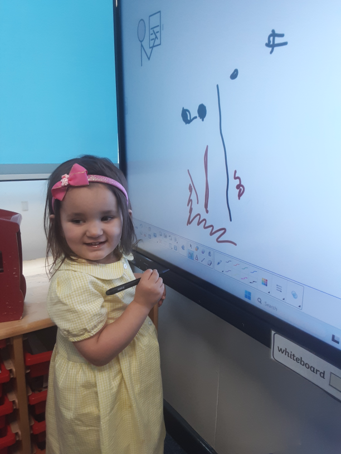
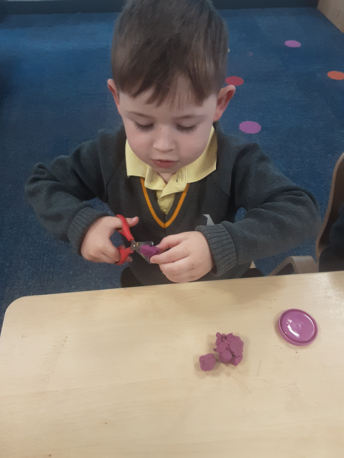
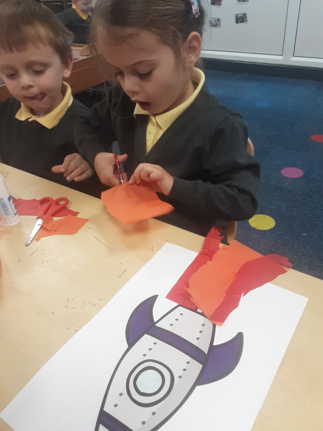
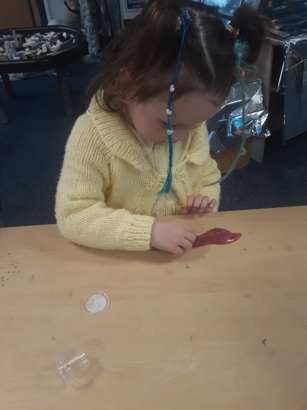
Developing our fine motor skills
The ability to make small, precise movements with the hands and fingers, is crucial for children's development and daily life. They impact everything from self-care tasks like dressing and eating to academic activities like writing and drawing, and even social interactions. Developing these skills early on is essential for independence, academic success, and overall well-being. To promote the development of these early fine motor skills, children will participate in a daily Dough Disco activity. Dough Disco helps to strengthen children's fine motor muscles to enable them to develop their pencil grip, which in turn will help to develop their writing skills. But most of all, it's fun!
What Is Dough Disco?
Dough Disco is a fun, short activity where children use playdough while moving their hands and fingers to music.
Children squeeze, roll, pinch, poke, stretch, and shape the dough while listening to lively music. The activity is playful and energetic, helping children develop important early skills in an enjoyable way.
Why Do We Use Dough Disco?
Dough Disco supports children’s development in several key areas:
🖐️ Fine Motor Skills
The movements used with the dough help strengthen the small muscles in the hands and fingers, which are essential for:
- Writing
- Using scissors
- Buttoning clothes
- Holding cutlery
✍️ Preparation for Writing
Strong fingers and good hand control help children develop the skills needed for mark-making and handwriting.
🎵 Listening and Concentration
Following instructions and moving to music helps children develop:
- Listening skills
- Focus and attention
- Ability to follow simple directions
😊 Confidence and Wellbeing
Dough Disco is inclusive and pressure-free. Children can explore the dough in their own way, helping to build confidence and enjoyment in learning.
What Does a Dough Disco Session Look Like?
- Each child has a small piece of playdough
- Music is played for a short period (usually 2–5 minutes)
- An adult may model actions such as rolling, squeezing, or pinching
- Children join in at their own level and are encouraged, not pressured
Can Dough Disco Be Done at Home?
Yes! Dough Disco is easy to do at home. You can:
- Use shop-bought or homemade playdough
- Play your child’s favourite music
- Encourage simple movements like squeezing and rolling
Just a few minutes a day can make a big difference.
As children's skills progress and grow, these skills and movements will be used to manipulate other materials such as clay or plasticine.
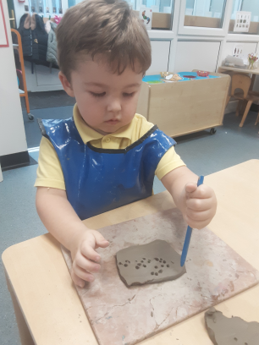
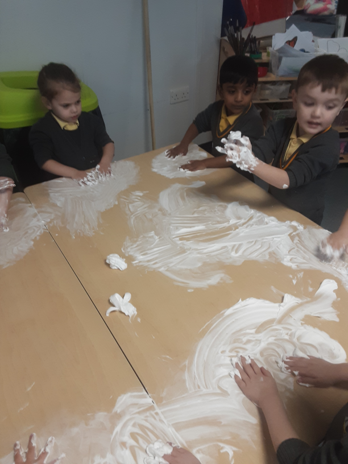
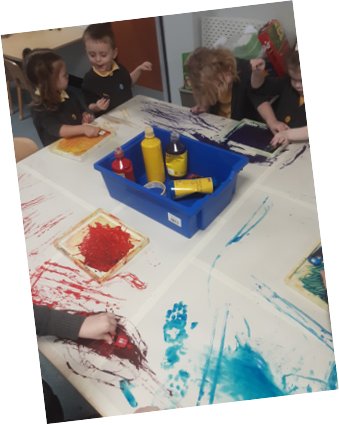
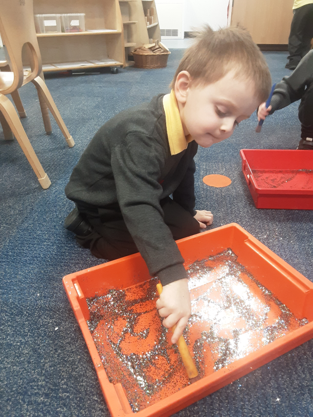
In addition, sensory experiences are crucial for developing fine motor skills in children. These experiences will be explored on a daily basis. Activities involving different textures, manipulating objects, and using hands and fingers strengthen small muscles and improve hand-eye coordination, dexterity, and grip strength, all of which are essential for tasks like writing, dressing, and eating.
Useful information
Below, you’ll find useful websites and activities to support your child in key areas such as phonics and number recognition.
✏️ Phonics Support

Phonics is a vital part of early reading and writing. We use a structured, multisensory approach to help children link sounds to letters and blend them into words.
Here are some fun and engaging websites you can use at home:
-
🔤 Phonics Play
Free games and activities sorted by phonics phases. Great for practising blending and segmenting. -
📚 Teach Your Monster to Read
A fun, interactive game that supports your child’s reading journey from letters and sounds to full sentences. -
📖 BBC Bitesize Phonics
Short videos and activities that reinforce phonics sounds and blending. -
Ruth Miskin Read Write Inc
🔢 Number Recognition & Early Maths
We love exploring numbers through stories, songs, games, and real-life play. Helping your child recognise numbers and understand basic counting is a great start.
Here are some recommended sites:
-
🎲 Topmarks – Number Games
Interactive games to help your child practise counting, number order, and matching numerals. -
📏 Numberblocks on CBeebies
A favourite in the classroom! Numberblocks makes learning numbers visual and fun. -
💡 ICT Games – Early Maths
A range of teacher-created maths games to support number formation, counting, and early problem-solving.
🏡 How You Can Help at Home
-
Read with your child every day—even five minutes makes a difference.
-
Count things together: steps, toys, or food items.
-
Play simple board games or card games that involve numbers and turn-taking.
-
Practise writing letters and numbers using chalk, finger painting, or sand.
-
Practice writing your own name
-
Practice oral blending skills, for example 'put on your c.o.a.t - coat'
Speech, Language and Communication Development
Mrs Bool, who is our trained member of staff runs a booster group intervention, over a 10 week period. This programme is designed to develop the communication skills of young children with delayed speech, language and communication needs. This group also offers children the opportunity to build confidence when communicating to others. Each week children will take part in activities that will focus on developing their listening, attention and understanding skills with a particular focus on expanding vocabulary and communication.
Search the Tiny Talkers website for simple tips and activities.
Follow Tiny Talkers Rotherham on Facebook for more tips, ideas and inspiration.
School meals
Mellors provide our school meals. They understand that providing nutritious and delicious meals for children is a top priority. Mellors believe that the joy of food begins with a sprinkle of imagination, a dash of creativity, and a whole lot of love. Yep, you guessed it right – they're the fun-loving, apron-wearing, food-loving family that’s all about bringing smiles to your lunchtime, using only fresh, local ingredients to lock in the flavour and nutrients.
Mellors' menus are diverse, colourful, exciting and flavoursome! We change menus for each season and rotate and on a 3-weekly basis – to ensure good variety and selection, always!
Please visit this link to find out more about menus and pricing. Click here
Free School Meals
Some children may be eligible to free school meals dependent upon family circumstances. To check eligibility or apply for free school meals follow the link below or speak with our inclusion team (Mrs Moore and Miss Cliffe)
https://www.rotherham.gov.uk/benefits/free-school-meals/2
If you have any questions or would like personalised ideas to support your child, feel free to contact us via the school office, email or during drop-off and pick-up.
Thanks for being part of your child’s learning journey! 🧠💬💛
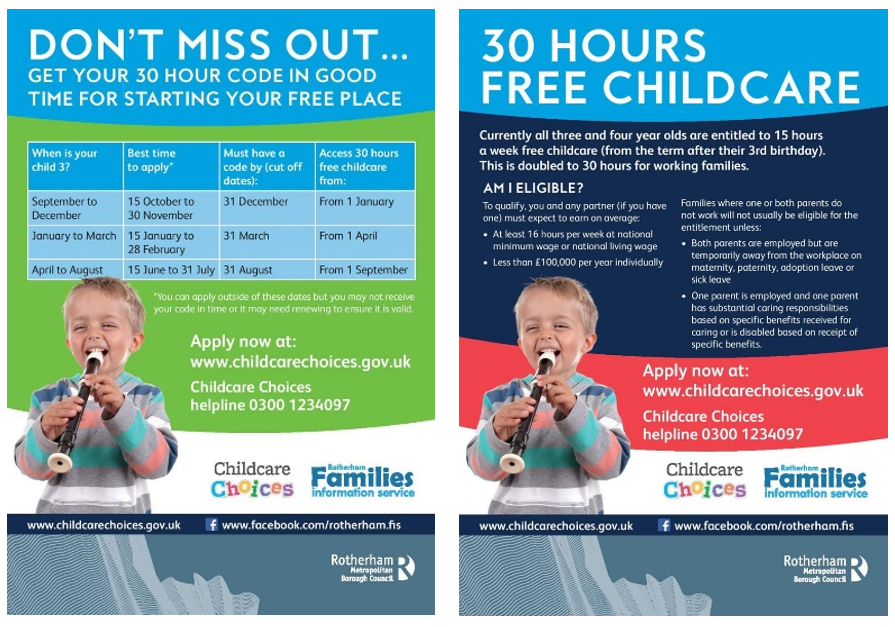
Admissions to FS1 (Nursery) at Brookfield
We are delighted that you are considering applying for a nursery place at Brookfield Primary Academy.
Please contact Mrs Lloyd via telephone 01709 570727 or email natalie.lloyd@brookfieldjunioracademy.org to add your child to our waiting list or to seek further information. Children are admitted into Foundation in September, January and April. (The term after your child's third Birthday). We offer both 15 hour and 30 hour funded places (subject to eligibility)
Please note: places are subject to availability.
Information on funding for parents
To check eligibility for funding or for more information, please visit https://beststartinlife.gov.uk/
Please note you must have secured your eligibility code and be able to provide one ahead of the starting date.